
Tiled Roofing Installed with Precision
Tiled roofing installed with precise setting-out, dependable weathering details and materials chosen to suit the property.
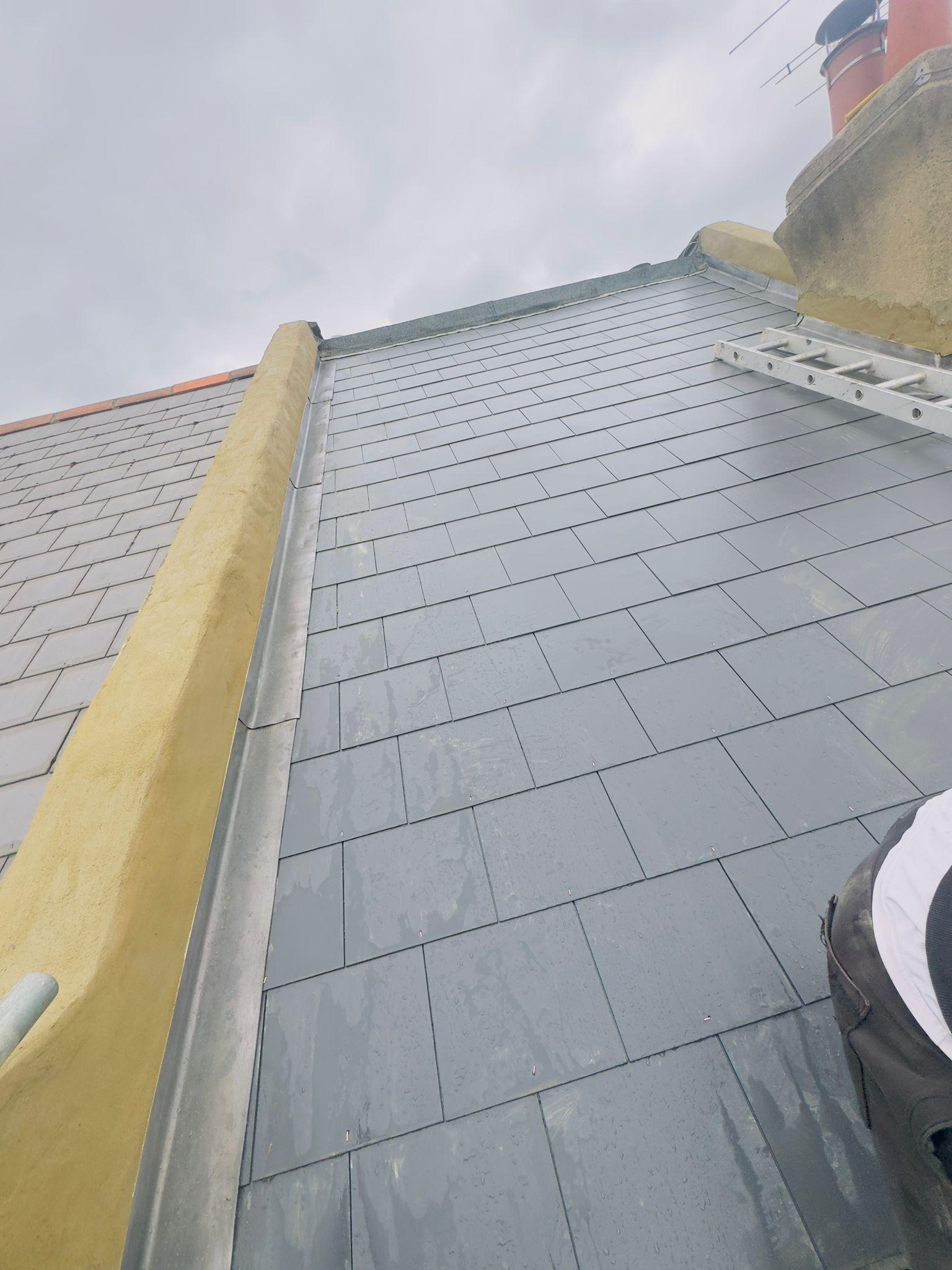
Tiled roofs suit a wide range of properties across Ipswich and Suffolk, from suburban homes to traditional Suffolk properties. ATS installs tiled roofs for new builds, extensions and re-roofing projects. Tile selection depends on the pitch, the structure and the architectural character of the property - a concrete interlocking tile on a steep Victorian terrace would look wrong, just as hand-made clay plain tiles on a modern estate would be disproportionate.
A correctly installed tiled roof provides decades of weather protection when the setting-out, underlay, battens and detailing are all right for the pitch and tile type. The setting-out - the way tiles are laid in consistent courses with correct overlaps and alignments - is what makes a tiled roof both weathertight and visually right. Poor setting-out shows immediately as uneven courses, misaligned cuts and inconsistent verges.
The honest assessment before any work starts
Tile selection depends on pitch, structure and the look the property needs. Some tiles are not suitable for low pitches, and the weight of concrete versus clay tiles has to be considered against the structure. Concrete interlocking tiles are heavier than clay plain tiles per square metre, which can be a constraint on some roof structures. ATS advises on the structural implications during the assessment.
How the work is carried out
ATS sets out the roof to ensure consistent coverage and weathering, installs the underlay and battens at the correct gauge, fixes the tiles with attention to ridges, valleys and abutments, and completes the ventilation details. The setting-out is planned before the first tile goes on, so the finished roof has even courses and correct overlaps throughout.
Tile types and pitch suitability
Concrete interlocking tiles suit moderate pitches and larger areas efficiently. Clay plain tiles and slate offer a traditional appearance and suit steeper pitches. ATS matches the tile to the pitch and property. Each tile type has a minimum pitch below which it cannot be guaranteed to remain weathertight - exceeding that minimum is not optional, it is a manufacturer requirement.
For properties in conservation areas or with planning restrictions, the tile choice may be dictated by the local authority. ATS advises on suitable coverings that meet both the technical requirements and the planning context. Where a re-roofing project involves a listed building or conservation area, the covering selection is agreed with the customer and, where required, the planning authority.
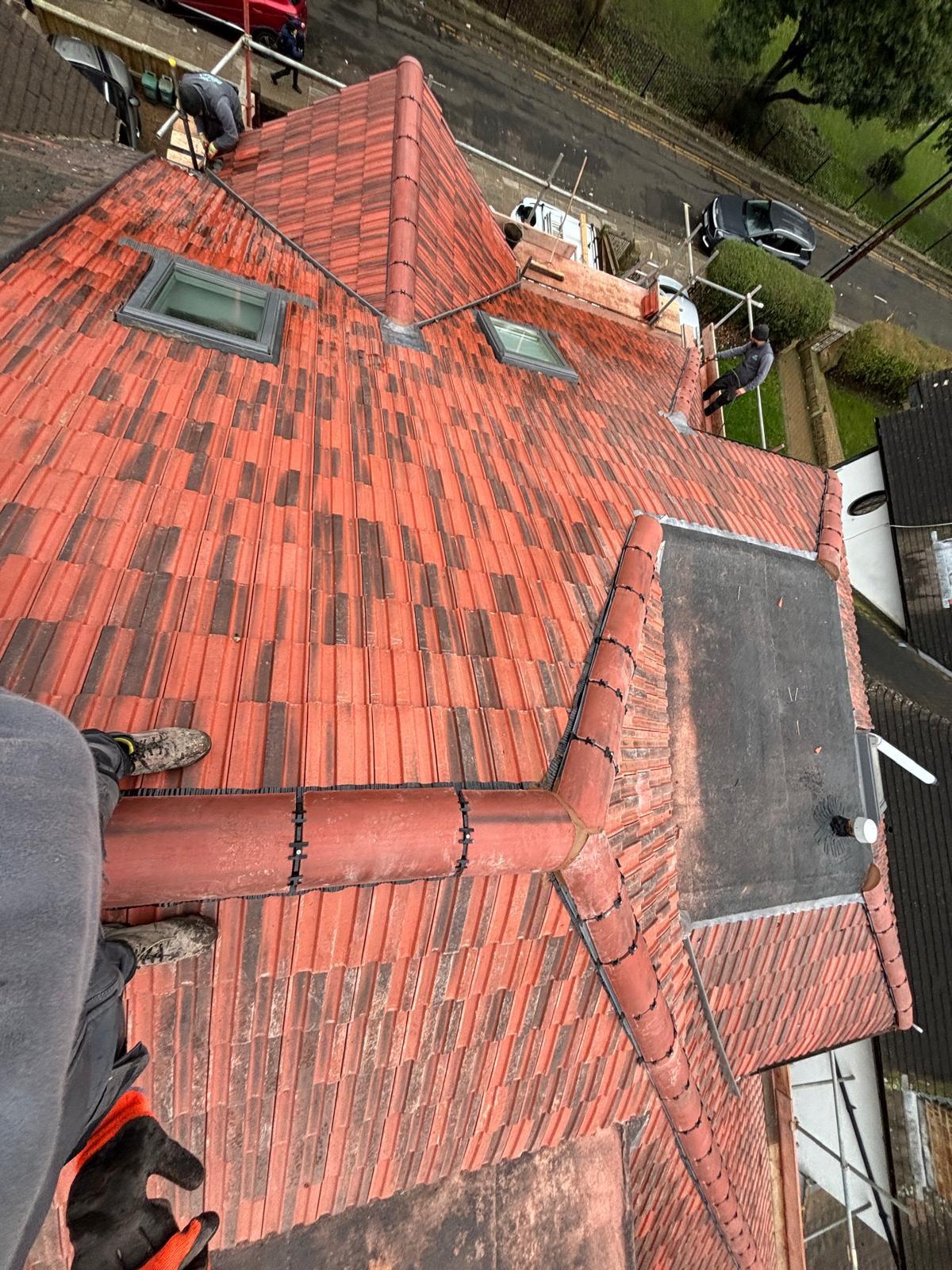
Underlay and battens
The underlay and battens form the secondary weatherproof layer. ATS installs a breathable membrane suited to the tile type and sets the batten gauge to the tile specification. The batten gauge - the spacing between battens - is dictated by the tile type and the pitch, and getting it wrong means the tiles will not seat correctly or will be vulnerable to wind lift.
Breathable underlays have largely replaced traditional felt, but they need to be installed with the right laps and supported at the eaves to prevent water pooling. ATS ensures the underlay and batten specification matches the tile manufacturer requirements so the system performs as designed.
Setting-out and ridges
Consistent setting-out keeps the roof weathertight and visually correct. ATS completes the ridges, hips and valleys to suit the tile system and the roof geometry. The ridge is the highest point of the roof and the detail most visible from the ground, so a well-finished ridge with consistent mortar beds or dry-ridge systems is what gives the roof its finished look.
Dry-ridge systems are increasingly used as an alternative to traditional mortar bedding, offering better wind resistance and lower maintenance. ATS discusses the options and advises on which suits the property and the customer preferences.
Valleys, abutments and ventilation
Valleys and abutments are common leak points. ATS forms them carefully and completes the ventilation so condensation does not build up in the roof void. Valley gutters carry significant water volumes during rain, so the detail has to be formed correctly - with the right width, falls and weathering - to prevent overflow and ingress.
Abutments where the roof meets a wall or chimney are flashed with lead or proprietary flashing systems. Where a chimney is present, the chimney repair service covers the flashing and masonry detail. Ventilation is provided through eaves, ridge or tile-vent systems, depending on the roof design and the chosen covering.
Relevant to this service
- Concrete interlocking tiles
- Clay plain tiles
- Slate
- Breathable underlay
- Treated battens
- Ridge, hip and valley systems
What affects the price
- Roof area and pitch
- Tile selection
- Setting-out complexity
- Valleys and abutments
- Access and scaffolding
- Ventilation requirements
Pricing is confirmed with a written quotation after the roof has been assessed.
Explore related services
Learn more about the roofing services that complement this work, or check whether we cover your area across Ipswich and Suffolk.
Discuss this service
Call the team or request a quotation with details of the property and the work you need.
Questions about tiled roofs
Concrete tiles are cost-effective and suit many modern properties. Clay plain tiles offer a traditional finish and are often the right choice for older or character properties. ATS advises on the right choice for the pitch, structure and setting, considering weight, cost and appearance.
Some interlocking tiles are rated for low pitches, but plain tiles generally are not. ATS confirms the minimum pitch for the chosen tile before specifying. If the pitch is too low for a tiled covering, a flat-roof system may be more appropriate.
Yes. Ventilation manages condensation in the roof void, which can cause timber decay and reduce the effectiveness of insulation. ATS includes ventilation in the specification rather than treating it as an optional extra.
A dry-ridge system fixes ridge tiles mechanically rather than with mortar bedding. It offers better wind resistance and lower maintenance than traditional mortar. ATS discusses whether a dry-ridge system or mortar bedding is more appropriate for the property.
A well-installed tiled roof typically lasts 50+ years. Concrete interlocking tiles have a manufacturer life expectancy of 40-60 years, while clay plain tiles and slate can last 100 years or more. The underlay and battens may need renewal before the tiles themselves.
Tell Us What Your Roof Needs
Describe the property, the issue you have noticed and the service you are considering. Add photographs if you have them, and ATS Roofing & Building will have the information needed to discuss the next step.