Chimney Repairs Across Ipswich & Suffolk
Chimney repairs including pointing, pots, cowls, masonry and lead flashing to address water ingress and structural concerns.
.jpeg&w=3840&q=75)
Chimney repairs are for property owners with a leaking chimney, crumbling pointing, loose pots, or visible masonry deterioration. Chimneys are exposed to the worst of the weather and need attention before small defects become structural. Across Ipswich and Suffolk, many older properties have chimney stacks that have not been properly maintained for decades - the pointing is crumbling, the flaunching is cracked, and the flashing is failing, all of which let water into the stack and the rooms below.
Careful chimney repairs address the route of water ingress and restore the weathering of the stack, pots and flashing so the chimney does not cause damage to the roof or rooms below. The stack is the most exposed part of the roof, taking the full force of wind, rain and frost, so the weathering details - pointing, flaunching, flashing and pots - have to be sound.
The honest assessment before any work starts
Some chimneys need only repointing and new flashing, while others have masonry deterioration that requires partial rebuilding. ATS advises on the appropriate scope after inspection, and flags where wider rebuilding advice is needed. A chimney with significant structural movement or spalling masonry may need more than pointing and flashing, and ATS will be honest about when that is the case.
How the work is carried out
ATS inspects the stack, pointing, pots, flashing and masonry, identifies what is causing the water ingress or deterioration, and carries out the appropriate repairs with safe access arranged for the work. The inspection covers the stack from above and below - the pointing and flaunching from the roof side, and the flashing and ceiling from inside the property where possible.
Pointing and flaunching
Crumbling mortar lets water into the stack and the roof below. ATS rakes out failed pointing and flaunching and reinstates them with mortar suited to the chimney. The pointing - the mortar between the bricks or stone - degrades over time as weather, frost and pollution break down the mortar surface. Once the pointing is gone, water enters the joints, freezes in winter and forces the masonry apart.
Flaunching is the mortar bed around the chimney pots that holds them in place and sheds water away from the stack. Cracked or crumbling flaunching lets water into the stack and can allow pots to become loose - a safety concern as well as a weathering issue. ATS renews the flaunching with a strong mortar mix suited to the exposure.
Pots, cowls and masonry
Loose or cracked pots and failed masonry are both safety and weathering concerns. ATS replaces pots, fits appropriate cowls and addresses masonry deterioration. A loose chimney pot is a falling hazard, and a cracked pot can let rain into the flue. Cowls are fitted to suit the flue use - whether to reduce downdraught, keep rain and birds out, or improve draw for an open fire or stove.
Masonry deterioration - spalling bricks, crumbling stone, cracking - can range from surface damage that repointing will address to structural movement that requires partial rebuilding. ATS assesses the extent and advises on the appropriate scope, flagging where a specialist structural assessment may be needed.
Lead flashing and water ingress
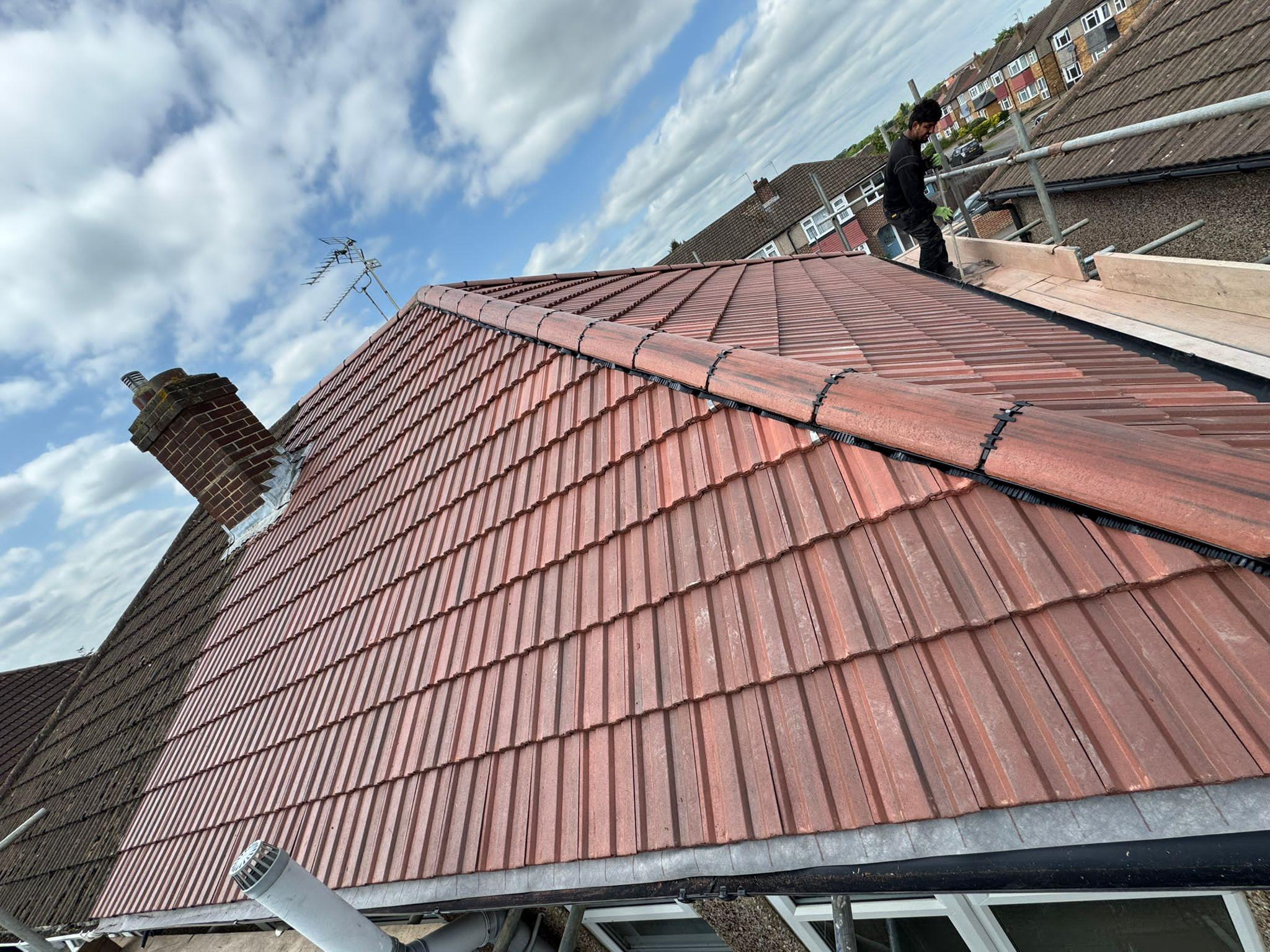
The flashing between the chimney and the roof is a common leak point. ATS renews failed flashing and soakers to restore the weathering at this detail. The flashing is the lead detail that bridges the junction between the chimney stack and the roof covering, and it is subject to thermal movement, weathering and mechanical damage over time.
Failed flashing is one of the most common causes of chimney leaks - water enters at the flashing gap, runs down the stack inside the roof, and appears as a damp patch on the ceiling or a stain on the chimney breast. ATS renews the flashing and soakers with lead dressed to suit the roof covering and the stack geometry. For more on flashing and weathering in the context of a full roof, see the re-roofing page.
Safe access and wider rebuilding
Chimney work requires safe access. ATS arranges scaffolding or tower access suited to the height and position of the stack. Where masonry deterioration is severe, ATS flags that wider rebuilding advice is needed and explains the options. A chimney with significant structural movement should not be repaired cosmetically - it needs to be addressed properly, and ATS will say so rather than selling a repair that masks a structural issue.
Where a chimney needs to be taken down or partially rebuilt, ATS advises on the scope, access and implications for the roof below. The roof repairs service covers the integration of the roof covering with the chimney after any rebuilding work, and the gutter repairs service covers any gutter adjustments needed where the stack abuts a gutter run.
Relevant to this service
- Mortar for repointing
- Lead flashings and soakers
- Chimney pots and cowls
- Flaunching mortar
- Masonry units where required
What affects the price
- Height and access requirements
- Extent of repointing needed
- Flashing renewal scope
- Pot and cowl replacement
- Masonry rebuilding scope
- Scaffolding or tower access
Pricing is confirmed with a written quotation after the roof has been assessed.
Explore related services
Learn more about the roofing services that complement this work, or check whether we cover your area across Ipswich and Suffolk.
Discuss this service
Call the team or request a quotation with details of the property and the work you need.
Questions about chimney repairs
Chimney leaks often come from failed flashing, crumbling pointing or cracked flaunching around the pots. ATS inspects the stack to identify the actual cause before recommending work. The inspection covers the stack from above and below, tracing the water path where possible.
ATS focuses on repair and restoration. Where a chimney needs to be taken down, ATS advises on the scope and access implications, and coordinates the roof integration after the stack is removed.
Yes. Cowls can be fitted to suit the flue use - to reduce downdraught, keep rain and birds out, or improve draw. ATS advises on the right cowl for the flue and the exposure.
The cost depends on the height of the stack, the extent of repointing needed, the access requirements and whether flashing or pots also need attention. ATS provides a written quotation after the inspection.
Chimneys should be inspected every few years, especially on older properties. Signs that an inspection is needed sooner include crumbling mortar, damp patches on the chimney breast, or loose pots. ATS inspects the stack and advises on the appropriate scope.
Tell Us What Your Roof Needs
Describe the property, the issue you have noticed and the service you are considering. Add photographs if you have them, and ATS Roofing & Building will have the information needed to discuss the next step.