
Re-Roofing for Failing or Ageing Roofs
Replace a failing or ageing roof with a carefully specified system and a clean, coherent finish.
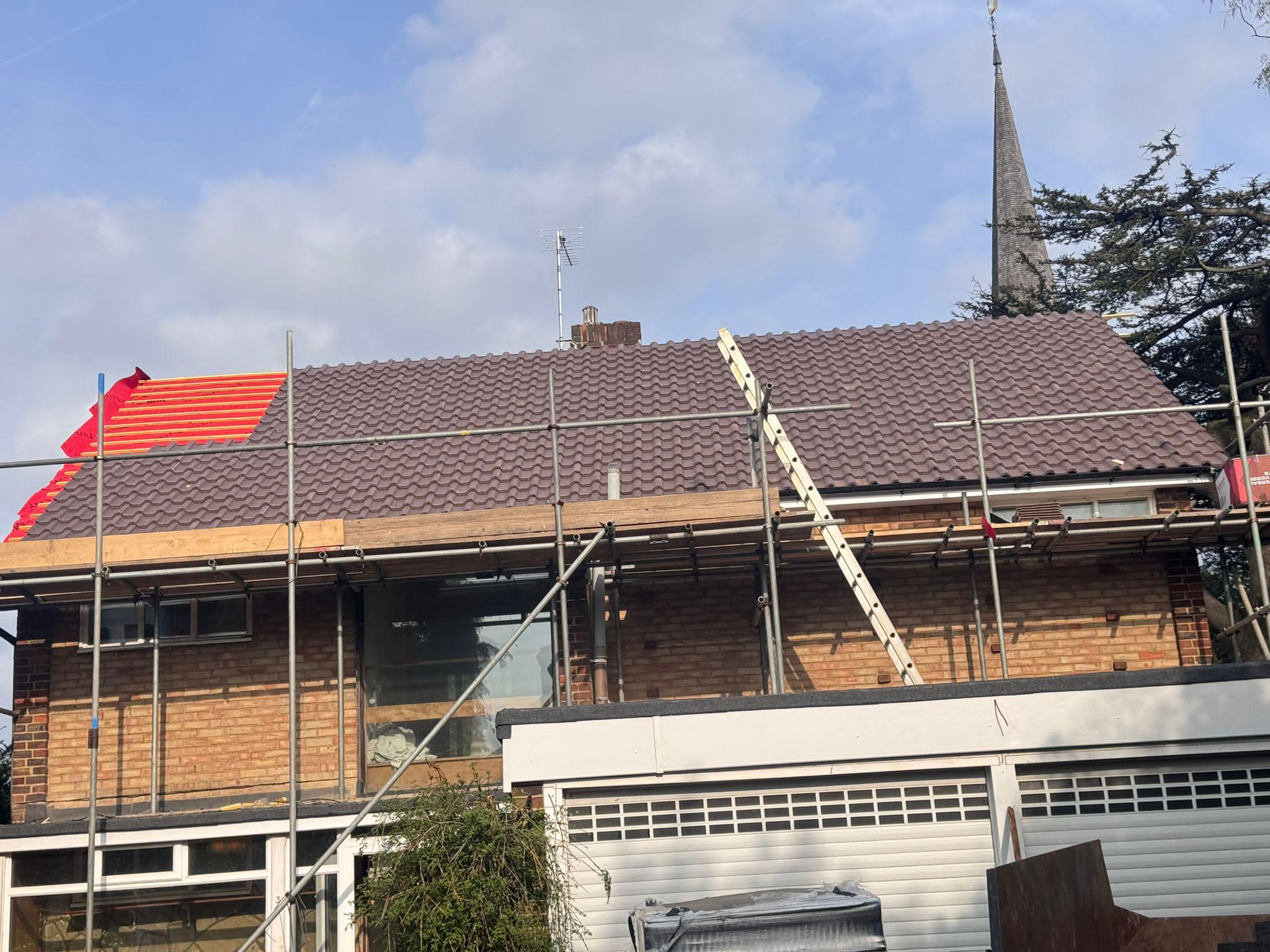
Re-roofing is for property owners whose roof has widespread deterioration, repeated failures or a covering that has reached the end of its life, and where localised repairs are no longer the economical option. Many properties across Ipswich and Suffolk have roofs installed twenty or thirty years ago that are now showing their age - tiles slipping, underlay crumbling, flashings failing - and the question is whether to keep patching or to renew the roof as a whole.
A re-roof renews the covering, underlay, battens and detailing so the roof performs as a coherent system rather than a patchwork of isolated repairs. The difference matters because repairs on a failing roof tend to recur - fix one leak and another appears elsewhere - because the underlying cause is the deterioration of the whole system, not a single defect.
The honest assessment before any work starts
In some cases an overlay is possible, but a full strip is usually recommended so the structure and underlay can be inspected and the detailing renewed. ATS advises on which approach suits the roof after seeing it. An overlay is cheaper and faster but can hide problems, add weight and reduce the roof void ventilation. A full strip costs more but allows every layer to be inspected and renewed.
How the work is carried out
ATS strips the existing covering, inspects the structure, renews the underlay and battens, reinstates the covering with appropriate ventilation and flashing details, and finishes with ridges, valleys and a clean-down. The work is planned around the weather, with protective measures in place to keep the property dry during the strip and re-cover stages.
When is re-roofing appropriate?
Widespread nail fatigue, crumbling underlay, repeated leaks across different parts of the roof, or a covering past its serviceable life all suggest renewal is worth considering. ATS assesses the condition before recommending re-roofing over repair. The assessment looks at the covering, the underlay, the battens, the structure and the detailing - because each of these layers can fail independently and the right recommendation depends on which ones are still sound.
If the failures are localised - one valley, one chimney flashing, a few slipped tiles - then a targeted roof repair may be the more economical choice. If the failures are spread across the roof, or if the underlay and battens are deteriorating, then re-roofing addresses the root cause rather than the symptoms.
Strip versus overlay
A full strip allows the structure, underlay and battens to be inspected and renewed. An overlay is sometimes possible but can hide problems and add weight. ATS explains which approach is appropriate for the roof in front of them. The overlay option is only viable when the existing covering is sound, the structure can carry the additional weight, and the underlay does not need replacement - conditions that are rarely met on a roof old enough to be considered for re-roofing.
A full strip also allows the roof void ventilation to be upgraded, which is increasingly important as modern insulation and airtightness improvements change the moisture balance in the roof. Skipping this step can lead to condensation problems that would not have existed when the original roof was installed.
Replacement scope and materials
The scope covers the covering, underlay, battens, flashings, ridges, valleys and ventilation. Materials are chosen to suit the pitch, property and setting. For many properties, the existing covering type can be matched or closely approximated. For others, a different covering may be more appropriate - lighter tiles to reduce structural load, or a different colour to suit a renovation.
Where the existing covering is a discontinued tile, ATS discusses the options for a close match or an alternative covering. The tiled roofing page covers tile types and pitch suitability in more detail. Lead flashings, valley systems and ridge details are all renewed as part of the scope rather than reused.
Ventilation and disruption planning
Condensation management is built into the specification. ATS also discusses access, timing and how disruption to the household will be managed so the work can be planned realistically. Re-roofing is disruptive - there is no way around that - but the disruption is temporary and manageable when it is planned properly. Scaffolding, skip placement, dust and noise are all discussed before work starts.
ATS works with the customer to agree a programme that minimises disruption where possible - for example, sequencing the strip and re-cover so that no section of the roof is exposed overnight, and scheduling noisy work at agreed times. The contact form allows customers to share details of the property and any access constraints before the first visit.
Relevant to this service
- Tiles and slate to suit the property
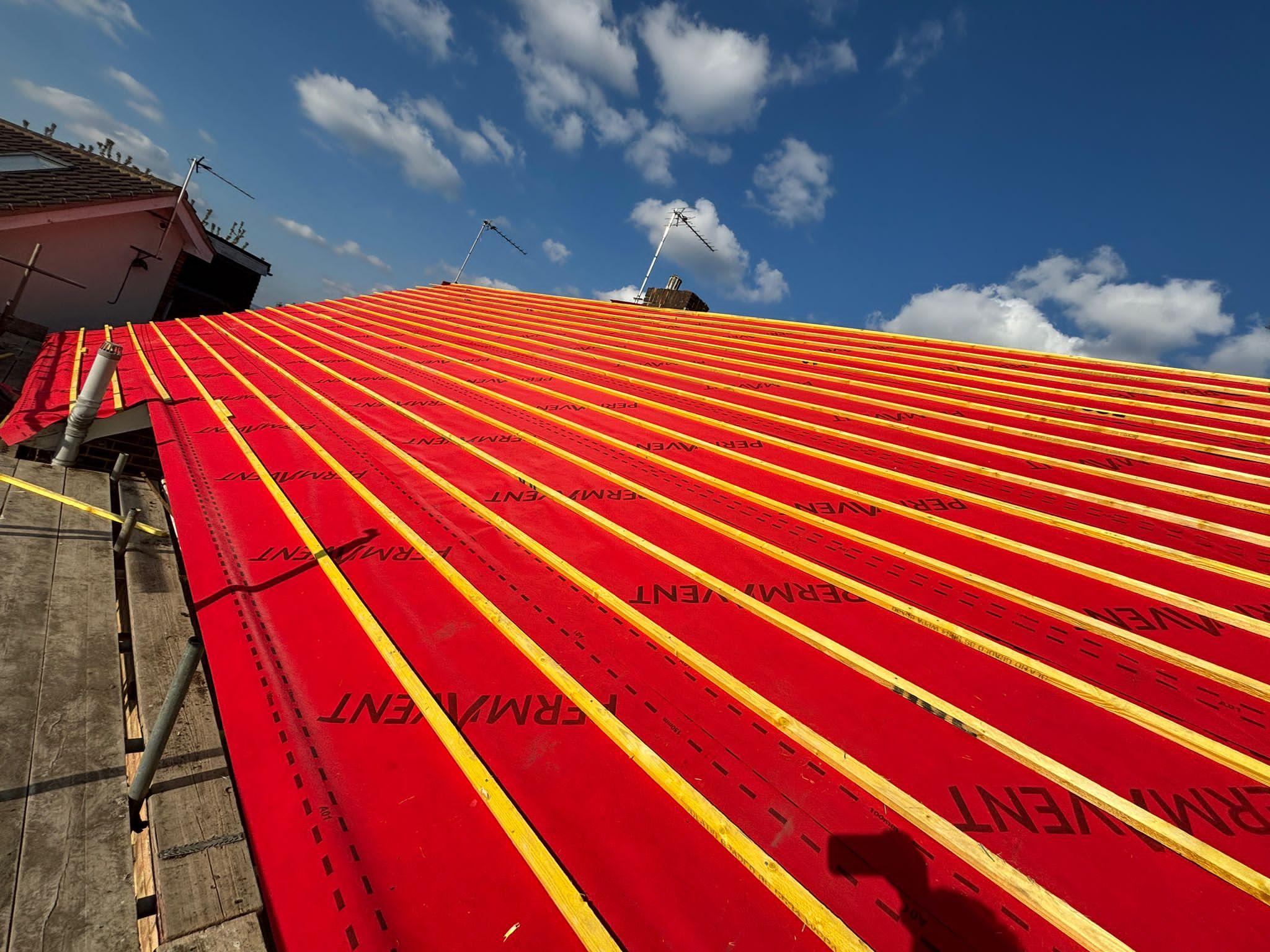
- Breathable underlay
- Treated battens
- Lead flashings and weatherings
- Ridge, hip and valley systems
- Ventilation components
What affects the price
- Roof area and pitch
- Extent of structural repairs required
- Covering selection
- Access and scaffolding
- Ventilation and detailing
- Disposal of the old covering
Pricing is confirmed with a written quotation after the roof has been assessed.
Explore related services
Learn more about the roofing services that complement this work, or check whether we cover your area across Ipswich and Suffolk.
Discuss this service
Call the team or request a quotation with details of the property and the work you need.
Questions about re-roofing
Repeated leaks, widespread tile or slate failure, or deteriorating underlay all suggest renewal may be more practical than repeated repairs. ATS assesses the roof before recommending either option - if the failures are localised, a repair may be sufficient, but if the deterioration is widespread, re-roofing addresses the root cause.
Most re-roofing work requires scaffolding for safe access. ATS includes access arrangements in the quotation. The scaffolding is typically erected before work starts and removed after the final check and clean-down.
Where a close match is available ATS will use it, though exact matches are not always possible with discontinued tiles. ATS discusses covering options during the assessment, including alternative tiles that suit the property and pitch.
Re-roofing is disruptive but temporary. ATS plans the programme to minimise disruption - sequencing the strip and re-cover so no section is exposed overnight, scheduling noisy work at agreed times, and keeping the property clean and accessible. All access, timing and disruption arrangements are discussed before work starts.
Yes. Removal and disposal of the existing covering is included in the scope. ATS arranges skips and waste removal so the property is kept clear of debris throughout the project.
Tell Us What Your Roof Needs
Describe the property, the issue you have noticed and the service you are considering. Add photographs if you have them, and ATS Roofing & Building will have the information needed to discuss the next step.