Flat Roof Systems and Replacements
Durable flat-roof solutions with careful attention to the deck, falls, outlets, edges and upstands.
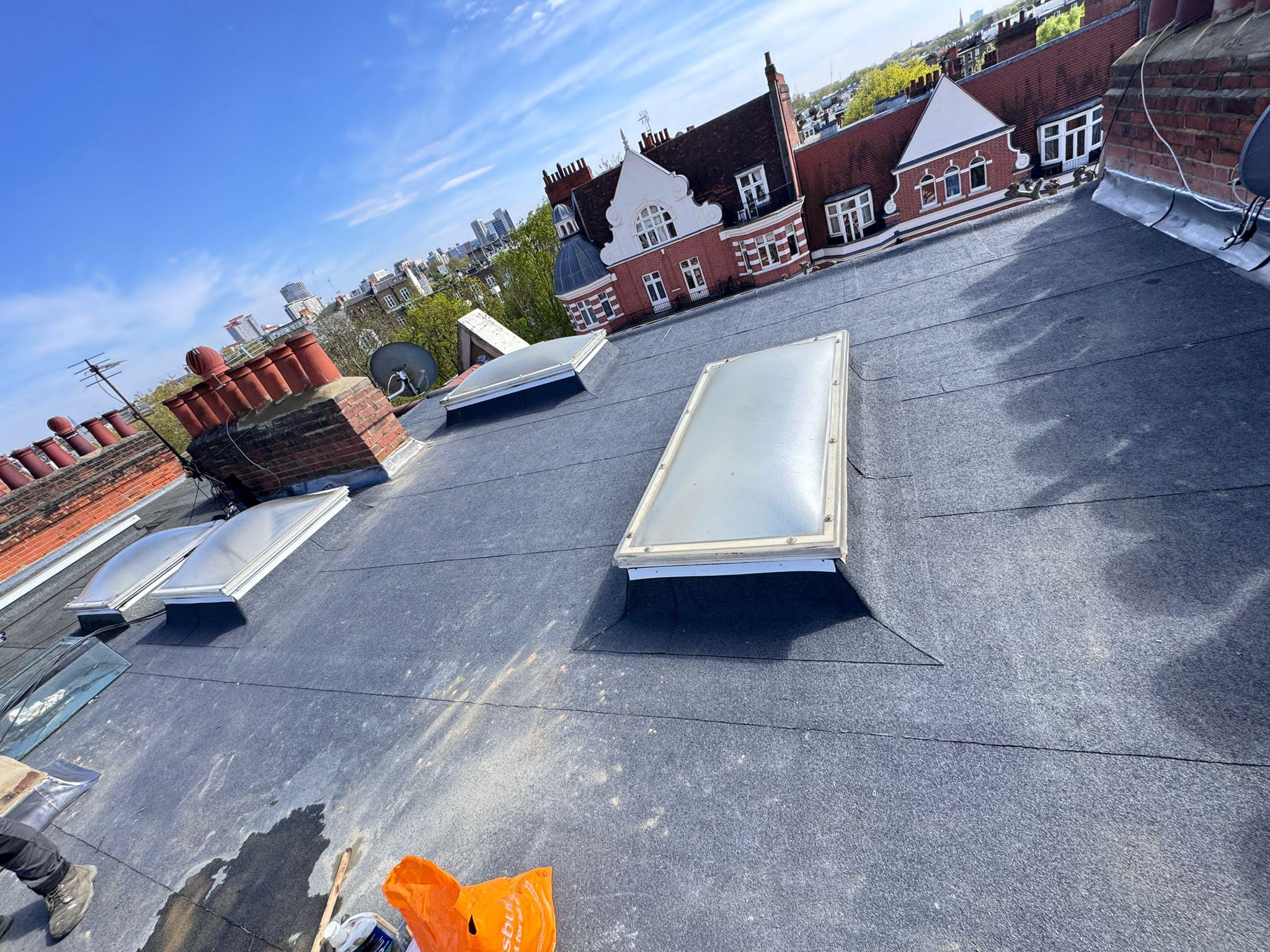
Flat roofs are installed on extensions, garages, dormers and low-pitch areas where a tiled covering is not suitable. ATS handles new flat roofs and full replacements of ageing systems. Across Ipswich and Suffolk, many properties have flat-roofed extensions or garages that were built with systems now reaching the end of their serviceable life - and the question is usually whether a local repair will hold or whether a full replacement is the better investment.
A well-built flat roof manages water reliably through correct falls, properly formed outlets and robust detailing at upstands and edges, where most flat-roof failures begin. The system is only as good as its weakest detail, so ATS pays particular attention to the points where water is most likely to find a way in - the upstands, edge trims, outlets and penetrations.
The honest assessment before any work starts
Several flat-roof systems are available, each with different suitability, lifespan and maintenance requirements. ATS explains the trade-offs of each option for the specific roof rather than recommending a single product for everything. Single-ply membranes offer flexibility and clean detailing, high-performance felt systems are cost-effective and proven, and GRP fibreglass provides a seamless finish suited to smaller areas. The right choice depends on the roof size, access, insulation requirements and budget.
How the work is carried out
ATS inspects the deck, confirms the falls and outlets are adequate, prepares the substrate, installs the chosen system with attention to upstands, edge trims and penetrations, and finishes the details that determine long-term performance. The work is planned around the weather, and the customer is kept informed of progress throughout.
Types of Flat Roofs We Install
Every flat roof has different demands. We recommend the right system for the roof shape, access, expected lifespan and budget, with careful attention to the details that keep water out.
Torch-On Felt
A multi-layer bitumen system melted onto the roof deck with a blowtorch, torch-on felt is a cost-effective flat roofing solution proven across UK properties. Multiple layers are bonded together to create a durable, weather-resistant surface. With proper installation and maintenance, a torch-on felt roof typically lasts 15 to 20 years, making it a practical choice for garages and extensions.
EPDM Rubber
A single-ply synthetic rubber membrane, EPDM is highly elastic and handles cold UK weather without cracking or splitting. The membrane is bonded to the deck in a single sheet, minimising seams and weak points. EPDM is lightweight, low-maintenance, and can last up to 50 years, making it a long-term solution for flat roofs.
GRP Fibreglass
Glass-reinforced polyester applied in liquid form over boarding, GRP cures to create a hard, seamless surface with no joints or weak points. It is fully walk-on and resistant to foot traffic, making it ideal for roofs with balcony access. A properly installed GRP fibreglass roof lasts 30+ years with minimal maintenance required.
Liquid Waterproofing
Cold-applied polyurethane or acrylic resins that cure into a seamless, flexible membrane. Liquid waterproofing is ideal for complex roof shapes, balconies, and repairs where heat application is not practical. The liquid conforms to irregular shapes and details that other systems struggle with, and can often be applied over existing surfaces.
Deck condition and preparation
The deck is the foundation of any flat roof. ATS checks the deck for soundness, movement and moisture damage before any new system is installed. A deck that has rot, deflection or moisture ingress will compromise the new system regardless of how well it is installed, so these issues are addressed first.
Where the existing deck is timber, the boards are checked for decay and the joists for adequate support. Where the deck is concrete or screed, the surface is assessed for cracks, movement and moisture content. The preparation stage is what determines whether the new system will perform for its full design life or fail prematurely.
Falls and outlets
Water has to move off the roof efficiently. ATS confirms the falls are adequate and that outlets and overflows are correctly positioned and sized to avoid ponding. Ponding - where water sits on the roof after rain - is one of the most common causes of flat-roof failure, and it usually points to inadequate falls rather than a problem with the covering itself.
Where existing falls are inadequate, ATS discusses options for improving drainage, which may involve tapering insulation or adjusting the deck. Outlets are checked for capacity and positioned to serve the roof area effectively. For more on diagnosing drainage problems on existing flat roofs, see the Flat Roof Repairs page.
Upstands, edge trims and penetrations
Most flat-roof leaks happen at the details. ATS forms upstands, edge trims and penetrations carefully so the system remains weathertight at the points most vulnerable to failure. Upstands at walls and parapets are formed to the correct height, edge trims are fixed securely with drip details that direct water away from the facade, and penetrations for pipes, vents and rooflights are sealed with the appropriate flashing or detail.
A well-installed membrane on a sound deck will still leak if the upstand is too low, the edge trim is loose, or the penetration detail is poorly formed. ATS treats these details as the critical part of the installation, not as finishing touches.
Rooflights and maintenance access
Where rooflights or maintenance access are required, ATS integrates them into the system with the right flashing and kerb details so they do not become a weak point. Rooflights are a common source of flat-roof leaks when the kerb detail is not formed correctly, so ATS pays particular attention to the integration.
For properties considering rooflights as part of a flat-roof replacement, the skylight installation service covers positioning, flashing and weathering in more detail. Maintenance access is also planned so the roof can be inspected and serviced safely without damaging the system.
Relevant to this service
- Single-ply membranes
- High-performance felt systems
- GRP fibreglass
- Insulation boards
- Edge trims and drip details
- Outlets and overflows
What affects the price
- Deck condition and preparation
- System selection
- Insulation requirements
- Size and access
- Number of upstands and penetrations
- Removal of the existing system
Pricing is confirmed with a written quotation after the roof has been assessed.
Explore related services
Learn more about the roofing services that complement this work, or check whether we cover your area across Ipswich and Suffolk.
Discuss this service
Call the team or request a quotation with details of the property and the work you need.
Questions about flat roofs
ATS installs single-ply membranes, high-performance felt and GRP fibreglass systems. The right choice depends on the roof, access and budget, which ATS discusses during the assessment. Each system has different strengths - single-ply offers flexibility and clean detailing, felt is proven and cost-effective, and GRP provides a seamless finish for smaller areas.
Ponding usually points to inadequate falls or outlets. ATS inspects the cause before recommending whether a local repair or full replacement is more appropriate. Where the falls can be corrected without replacing the entire system, a targeted repair may be sufficient. See also the Flat Roof Repairs page for diagnosis-focused work.
Where insulation forms part of the roof build-up, ATS discusses upgrading it as part of the replacement to improve thermal performance and reduce condensation risk. Upgrading insulation during a replacement is usually more cost-effective than returning to the roof later.
The lifespan depends on the system, exposure and maintenance. High-performance felt systems typically last 20-25 years, single-ply membranes 25-30 years, and GRP fibreglass 30+ years when correctly installed. ATS advises on the expected lifespan of each option during the assessment.
Flat roof systems are available in a range of colours and finishes. For visible roofs, ATS discusses the aesthetic options alongside the performance characteristics so the finished roof suits the property.
Tell Us What Your Roof Needs
Describe the property, the issue you have noticed and the service you are considering. Add photographs if you have them, and ATS Roofing & Building will have the information needed to discuss the next step.