Flat Roof Repairs for Existing Flat Roofs
Diagnosis and repair of existing flat roofs, addressing seams, details, outlets and ponding before recommending replacement.
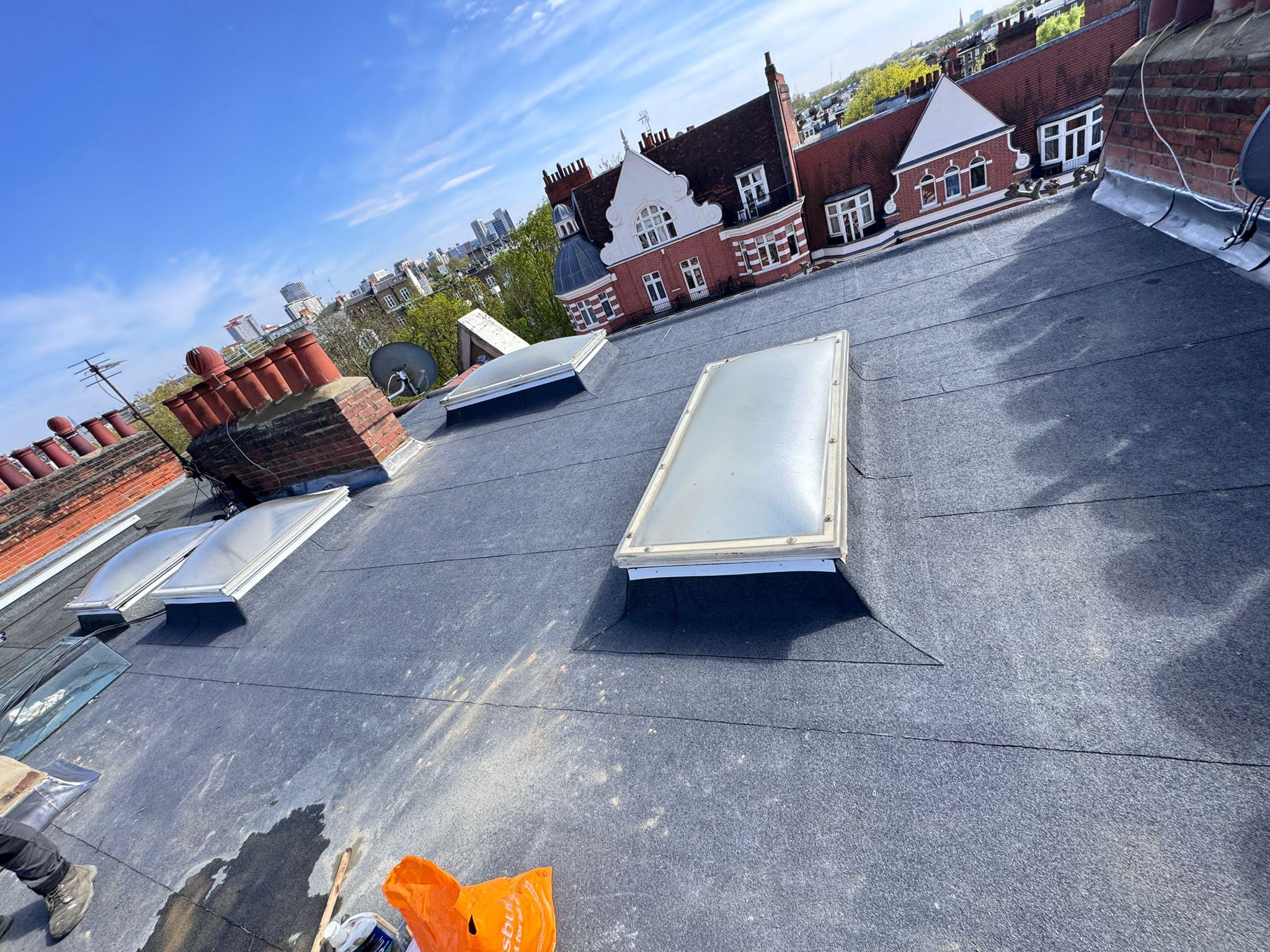
Flat roof repairs are for property owners with an existing flat roof that has started to leak, pond water, or show signs of ageing at the seams or edges. The first step is diagnosis, not replacement. Across Ipswich and Suffolk, many properties have flat-roofed extensions, garages or dormers with systems that are ten, twenty or thirty years old - and the question is whether the leak is a local defect that a repair will fix or a sign that the whole system needs replacing.
A correctly diagnosed flat roof repair addresses the specific defect causing the leak, whether at a seam, outlet, upstand or edge, without replacing the whole system unnecessarily. The key is identifying what is actually wrong - a failed seam, a blocked outlet, a split at an upstand - rather than coating the whole roof and hoping for the best.
The honest assessment before any work starts
Some flat-roof defects are local and repairable, while others indicate the system has reached the end of its life. ATS explains when a repair is a durable fix and when replacement is the better investment. A repair on a system with widespread blistering, multiple failed seams and degraded membrane is a stopgap, not a solution.
How the work is carried out
ATS inspects the roof, identifies whether the leak is from a local defect, failed detail, drainage issue or broader system deterioration, and recommends a repair or replacement based on what is actually wrong. The inspection covers the membrane surface, the seams, the details, the outlets and the deck condition.
Defect diagnosis
The visible damp patch is rarely the actual entry point on a flat roof. ATS traces the water path and inspects the seams, details and outlets to find the cause. Water on a flat roof can travel horizontally across the deck before finding a way through, so the damp patch on the ceiling below may be several metres from the actual leak. This is why a proper inspection matters - applying sealant to the area above the damp patch is a guess, not a diagnosis.
The inspection looks for blisters, splits, failed seams, degraded membrane, blocked outlets, ponding and failed details. Each of these points to a different cause and a different repair. For a full flat-roof replacement rather than a repair, see the flat roofs installation page.
Seams, details and outlets
Most flat-roof leaks happen at seams, upstands, penetrations and outlets. ATS repairs the specific detail that has failed rather than coating the whole roof. Seam failures occur where two sheets of membrane meet and the joint has degraded - the repair involves cleaning, re-seaming and sealing the joint. Upstand failures happen where the membrane meets a wall or parapet - the repair involves re-forming the upstand with new membrane and flashing.
Outlet failures occur where water leaves the roof - a blocked or damaged outlet causes ponding, which in turn causes leaks. ATS clears blockages, renews damaged outlets and ensures the overflow is functional. For properties with gutter drainage rather than internal outlets, the gutter repairs service covers the drainage system.
Ponding and drainage
Water that sits on a flat roof will find a way through eventually. ATS addresses ponding by looking at the falls and outlets before recommending a repair. Ponding - where water remains on the roof 48 hours after rain - points to inadequate falls, a blocked outlet, or deck deflection. The repair may involve clearing the outlet, improving the falls with tapering insulation, or addressing the deck deflection.
If the ponding is caused by a structural issue with the deck, a membrane repair alone will not solve it - the deck needs to be addressed. ATS explains the difference and recommends the appropriate scope. Where the falls cannot be improved without replacing the system, a full flat roof replacement may be the more durable solution.
Local repair versus replacement
A local repair is durable when the rest of the system is sound. When the membrane is failing across the roof, replacement is more economical. ATS explains the difference honestly. Signs that a flat roof needs replacement rather than repair include: widespread blistering, multiple seam failures, membrane that is brittle or cracked when pressed, and leaks from different areas on different occasions.
When a repair is the right call, ATS uses matching materials where available and ensures the repair is integrated with the existing system rather than patched on top. When replacement is the right call, the flat roof installation service covers the full process from deck preparation to system installation. In either case, the recommendation is based on what is actually wrong, not on selling the larger job.
Relevant to this service
- Membrane repair materials
- Sealants and lap sealants
- Outlet and overflow components
- Edge trim repairs
- Flashing materials
What affects the price
- Extent of the defect
- System type and availability of matching materials
- Access requirements
- Whether the roof is repairable or needs renewal
- Number of details affected
Pricing is confirmed with a written quotation after the roof has been assessed.
Explore related services
Learn more about the roofing services that complement this work, or check whether we cover your area across Ipswich and Suffolk.
Discuss this service
Call the team or request a quotation with details of the property and the work you need.
Questions about flat roof repairs
It depends on whether the leak is from a local defect or wider system failure. ATS inspects the roof and advises whether a repair will be durable or whether replacement is the better option. If the membrane is sound and the leak is from one failed detail, a repair is usually sufficient. If there is widespread deterioration, replacement is more economical.
Ponding points to inadequate falls or outlets. Over time it will find a way through the membrane. ATS assesses whether the drainage can be improved or whether the roof needs renewal. If water remains on the roof 48 hours after rain, it should be addressed.
ATS repairs felt, single-ply and GRP systems. The repair approach depends on the system and the availability of matching materials. For felt roofs, repairs involve bitumen-based materials; for single-ply, patching with matching membrane and heat-welded joints; for GRP, resin and topcoat application.
A properly diagnosed repair on an otherwise sound system can last for years. A repair on a failing system is a stopgap. ATS advises on the expected lifespan of the repair during the inspection, so the customer can decide whether a repair or replacement is the better investment.
Many flat roof repairs can be carried out in winter, though some materials require warmer temperatures for proper adhesion and curing. ATS advises on what is feasible in the current conditions and can install temporary weatherproofing where a permanent repair has to wait for better weather.
Tell Us What Your Roof Needs
Describe the property, the issue you have noticed and the service you are considering. Add photographs if you have them, and ATS Roofing & Building will have the information needed to discuss the next step.