Moss Removal & Roof Cleaning in Ipswich & Suffolk
Professional moss removal and roof cleaning across Ipswich and Suffolk. ATS safely clears moss, algae and lichen from tiled and flat roofs, treats the surface to slow regrowth, and inspects for the damage that moss growth can hide.
Moss removal is for homeowners, landlords and buyers who can see moss, algae or lichen building up on the roof and want it dealt with properly before it causes damage. Moss growth is common across Suffolk, particularly on north-facing slopes and properties shaded by trees or neighbouring buildings where the roof stays damp for longer. A heavy moss covering does not mean the roof is failing, but it does mean the tiles are being held in a permanently damp environment, and that environment accelerates the kind of weathering that eventually leads to leaks. If you have noticed moss falling into the gutters, green staining spreading across the tiles, or patches of lichen taking hold on the ridge, it is worth having the roof assessed and the growth removed before the underlying covering is compromised. For properties with active leaks or slipped tiles, see the roof repairs page, as moss removal alone will not fix a defective roof.
Removing moss and organic growth restores the roof's ability to shed water cleanly. Moss acts like a sponge, holding moisture against the tile surface through every wet spell and every frost cycle. Over time that moisture penetrates the tile, causes spalling and cracking, and works its way under the edges of tiles and into the underlay below. Clearing the growth lets the roof dry out between rainfalls, slows further weathering, and gives a clear view of the condition of the covering underneath. The inspection that follows removal often reveals issues that were hidden by the moss, from cracked tiles to failed pointing, which can then be repaired before they become leaks.
The honest assessment before any work starts
Moss removal is suitable when the roof covering is fundamentally sound and the growth is the primary concern. If the tiles are already badly spalled, the underlay is failing, or the roof is leaking in multiple places, cleaning the moss will not solve the underlying problem and a wider repair or renewal may be the right call. ATS advises honestly on this after inspecting the roof. Pressure washing is not the default approach, as high-pressure jets can damage tile surfaces, strip granules from concrete tiles, and force water under the laps. Where pressure washing is appropriate, it is used at controlled pressure with care for the condition of the covering. For roofs where the covering is fragile or elderly, manual scraping and chemical treatment are the safer route.
How the work is carried out
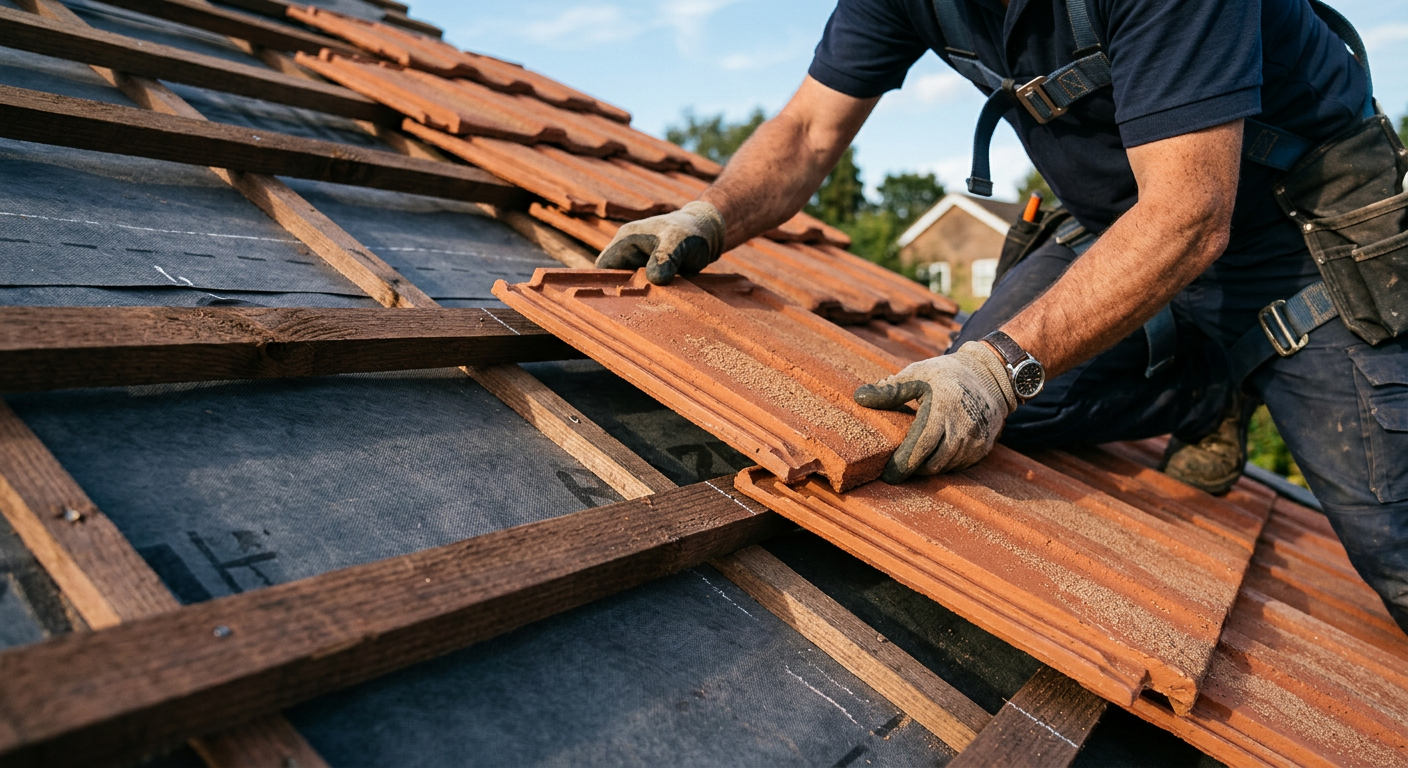
ATS inspects the roof from the ground and at height before any cleaning begins, assessing the type and condition of the covering, the extent of the growth, and whether any defects are visible beneath the moss. The removal method is then chosen to suit the roof, not applied as a one-size-fits-all process. Moss is scraped or brushed from the tiles by hand where the covering is fragile, and treated with a biocidal wash that kills the remaining root material and spores. This treatment is what slows regrowth, as physically removing the visible moss without treating the surface leaves the spores behind to regrow within a season or two. Gutters and downpipes are cleared of the debris that falls during the process, and the roof is inspected once the surface is clean to check for cracked tiles, failed pointing or other defects that the moss was hiding. Any flat roof repairs needed at the same time are coordinated so the property is dealt with in one visit where possible.
Why moss grows on roofs
Moss, algae and lichen thrive where a roof stays damp and shaded. North-facing slopes in Suffolk rarely see enough direct sun to dry out fully between rainfalls, and properties surrounded by trees or close to neighbouring buildings have the same problem. Moss spores settle on the tile surface, take hold in the small gaps between tiles and around the ridge, and spread outward as they retain more and more moisture. The growth is not a sign of neglect; it is a natural consequence of the roof's orientation and environment. But it does need managing, because a roof that holds water against its own surface is ageing faster than it needs to.
Algae appears as green or dark staining across the tile face, often in streaks that follow the path of rainwater run-off. Lichen forms pale, crusty patches that bond tightly to the tile surface and are harder to dislodge than moss. All three retain moisture and all three contribute to the gradual deterioration of the covering. Treatment targets all three, not just the visible moss tufts.
The damage moss can cause
The most immediate problem is moisture retention. A heavy moss covering holds water against the tile for days after rain, and in winter that water freezes and thaws repeatedly, expanding in micro-cracks and accelerating spalling. Concrete tiles are particularly vulnerable, as the frost cycle breaks down the surface granules and exposes the body of the tile to further absorption. Clay tiles and slates are more resistant but not immune, especially where the surface has already aged.
Moss also grows in the gaps between tiles and under the edges of ridge and verge details. As it expands it can lift tiles slightly, opening a path for wind-driven rain to penetrate under the covering and reach the underlay. In severe cases, moss growth at the eaves blocks the natural run-off into the gutter, causing water to track back under the tiles and into the fascia. The weight of saturated moss is not trivial either, a heavy growth across a large roof adds a significant load to the structure. Clearing the moss removes all of these risks and allows the roof to function as it was designed to.
How moss is removed safely
The method depends on the roof. For sound concrete and clay tiles, moss is scraped from the surface by hand, the gutters are cleared of the debris, and a biocidal wash is applied to kill the remaining spores and root material. The wash works over the following weeks to break down the residual growth, so the roof continues to clean itself after the visit. This approach is effective and does not subject the tiles to the kind of mechanical stress that pressure washing can cause.
For roofs where the covering is fragile, elderly, or showing signs of spalling, pressure washing is avoided entirely and manual removal with chemical treatment is used. Where pressure washing is appropriate, such as on robust concrete tiles in good condition, it is used at controlled pressure with the operator working down the roof to avoid forcing water under the laps. The choice of method is made after the inspection, not assumed beforehand. Once the surface is clean, the roof is re-inspected for any defects that were hidden, and the customer is advised on whether any roof repairs are needed alongside the cleaning.
Preventing regrowth
Physical removal alone is temporary. The spores that produced the moss are still present on the tile surface and in the air, and without treatment the growth will return within a couple of seasons. The biocidal wash applied after removal kills the residual organic material and creates a surface that is hostile to new spore establishment, significantly slowing regrowth. A treated roof typically stays clean for several years, depending on the orientation, shading and local environment.
For properties in heavily shaded locations, periodic re-treatment may be worthwhile. Trimming back overhanging branches to let more light and air reach the roof is one of the most effective long-term measures, as it reduces the damp conditions that moss depends on. ATS advises on this during the visit and can re-treat the roof as part of a maintenance plan if the property is in a high-growth area.
Moss removal and the wider roof
Moss removal is often the moment when hidden defects come to light. A roof that looked sound through its green covering can reveal cracked tiles, failed pointing or perished underlay once the surface is clean. This is not a reason to avoid cleaning the moss, it is a reason to have the roof inspected properly once the covering is visible. Discovering a cracked tile during a moss removal visit is better than discovering it during a winter leak, because the repair can be planned rather than rushed.
Where the inspection reveals wider deterioration, the moss removal has still served a purpose, it has given a clear picture of the roof's actual condition. From there, the options range from targeted repairs to a full re-roof if the covering has reached the end of its life. The roofing services page covers the full range of renewal and installation options for properties that need more than cleaning and minor repairs. ATS explains the findings and the options clearly, so the decision is based on what the roof actually needs.
Relevant to this service
- Biocidal roof wash and moss treatment
- Hand tools for manual scraping
- Controlled-pressure washing equipment where suitable
- Replacement tiles for cracked or damaged units found during cleaning
- Gutter clearing equipment
What affects the price
- Roof size and pitch
- Type of covering (concrete tile, clay tile, slate, flat roof)
- Severity of moss, algae and lichen growth
- Access requirements and whether scaffolding or a tower is needed
- Whether the roof is fragile and requires manual removal only
- Whether repairs are needed once the moss is cleared and the surface is visible
Pricing is confirmed with a written quotation after the roof has been assessed.
Explore related services
Learn more about the roofing services that complement this work, or check whether we cover your area across Ipswich and Suffolk.
Discuss this service
Call the team or request a quotation with details of the property and the work you need.
Questions about moss removal
Not when it is done correctly. ATS assesses the tile type and condition before choosing the removal method. For sound tiles, manual scraping and biocidal treatment are used. Pressure washing is only used on robust coverings in good condition, at controlled pressure. For fragile or elderly tiles, pressure washing is avoided entirely and manual removal with chemical treatment is the safer route.
A roof treated with biocidal wash after physical removal typically stays clean for several years. The treatment kills the residual spores and root material that would otherwise regrow. Regrowth speed depends on the roof orientation, shading and local environment. North-facing or heavily shaded roofs may need periodic re-treatment, and trimming back overhanging branches is one of the most effective long-term measures.
Moss itself does not create holes, but it contributes to the conditions that lead to leaks. It holds moisture against the tile, accelerates frost damage and cracking, and can lift tile edges as it grows, opening a path for wind-driven rain. Clearing the moss lets the roof shed water as designed and reveals any defects underneath that may already be causing problems.
Yes. Moss and debris fall into the gutters during removal, and the gutters and downpipes are cleared as part of the visit. A gutter blocked with moss debris will overflow and direct water down the fascia and walls, so clearing it is an essential part of the process, not an optional extra.
A moss-covered roof can put off buyers and surveyors because it suggests the roof has not been maintained. Removing the moss and treating the surface improves the appearance and gives a clearer picture of the roof's condition. If you are buying a property, a roof inspection alongside the survey can identify whether the moss is hiding any real problems.
The cost depends on the roof size and pitch, the type of covering, the severity of the growth, and the access requirements. A small, easily accessed roof with light growth costs less than a large, steep roof with heavy moss that needs scaffolding. ATS provides a written quotation after the inspection, along with an honest assessment of whether the roof needs more than cleaning.
Tell Us What Your Roof Needs
Describe the property, the issue you have noticed and the service you are considering. Add photographs if you have them, and ATS Roofing & Building will have the information needed to discuss the next step.